Posts

Showing posts with the label African culture

South African Music and Dance
Image
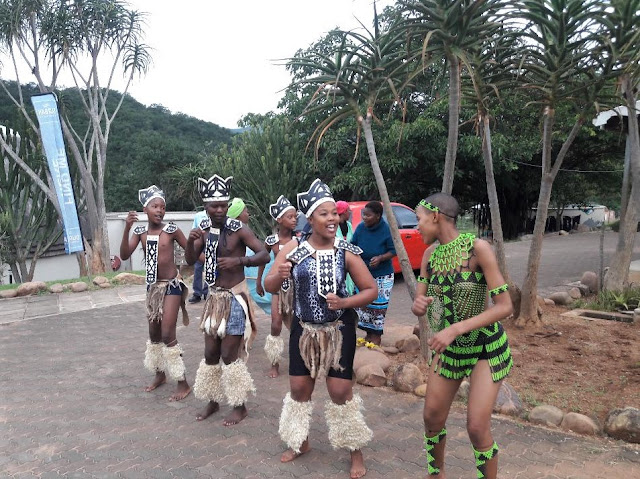
South Africa is an exciting country. No matter where you are, in a big city like Johannesburg , or a rural village, there's always music, dance or art incorporated into the environment, usually all three. African culture does not separate art and culture from everyday living but I was still taken aback by the exuberant sounds and dance I witnessed everywhere I traveled in South Africa. I love African music and dance, it connects on a deeper level than anything  I've seen in the West. So experiencing the varied rhythms, movements and emotions of live South African music and dance was a joyful treat. Check out a few of my faves from Durban , Isithumba and Cape Town , in the videos below. These Zulu women mesmerized me with the power of their harmonies and the emotions bursting through the song. I don't understand Zulu but I felt every single verse of this tune. Full of high spirits and excitement, these dancers in Isithumba cultural village called up the power of...

Banku and Waakye and Palava Sauce: The Glory of Ghanaian Food

Image
Despite the stereotypes, African food is as varied and amazing as the continent itself. I'm lucky that I live in a city that offers an array of West, East and North African cuisine so I arrived in Ghana expecting to enjoy classic dishes like waakye  (black eyed peas with rice), banku  (fermented corn and cassava dough formed into balls to accompany fish or meat) and heaps of fresh fish. What I wasn't prepared for was the sheer variety and complexity of Ghanaian cuisine . Yes, there were the classics that I was familiar with but there were also variations according to region and city as well as modern interpretations and fusion meals. I was overwhelmed with the culture and history that I experienced in Ghana and I was also overstuffed with food every single day of my travels. I ate a lot.  I discovered that my favorite was palava sauce , a  savory sauce made with kontomire  greens that are little like mustard greens and bitter melon seeds, served with fish. H...

A Royal Experience at the Kumasi Grand Durbar in Ghana

Image
Tales of African kings and queens are popular with the African American diaspora. It's an important way to acknowledge and reclaim our history but it never occurred to me that I would one day witness this living history. When I slowly moved through the crowds and colorful revelry of Ghana's historic Grand Durbar in Kumasi, I found myself surrounded by Asante and Akyem royalty . A Grand Durbar is a celebration of when kings and high officials come together for different occasions.  This one marked the 75th anniversary of the passing of Okeyehene Nana Sir Ofori Atta I, a highly influential traditional ruler who died in 1943. I was dazzled by the procession of over 100 royals and their courts, complete with golden chairs, staffs and embroidered umbrellas. I learned that this was a particularly historic event because the Asante and Akyem clans had not come together in over 200 years. Before the two kings arrived to be carried through the adoring crowds, the Asantehe...

St. Thomas Carnival and African Heritage

Image
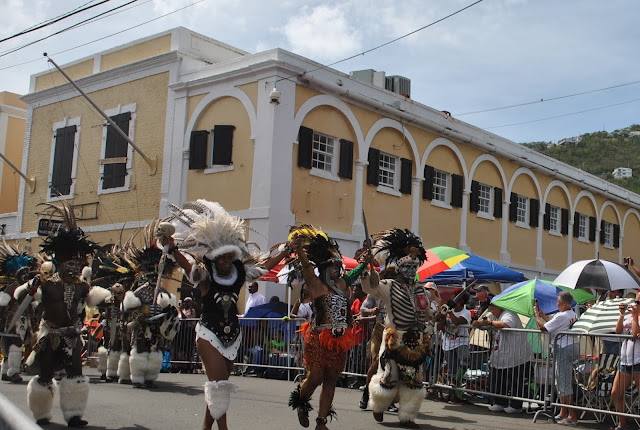
Everybody loves Carnival. A lot of people think that it's just a big, colorful excuse to party but there is so much historical significance to the practice. Carnival literally translates to "farewell to meat" in Latin. It represents the Lenten tradition of the Catholic church to sacrifice during the month leading up to the resurrection of Jesus. A big party preceded the month of sacrifice. Spanish and Portuguese colonizers brought the tradition to North and South America. But as I watched St. Thomas Carnival , I was excited to see the Shaka Zulu troupe above, because so much of contemporary Carnival culture incorporates African culture. Enslaved Africans weren't allowed to join the Carnival celebrations so they created there own. All the feathers and masks used for costumes directly relate to African ceremonial style. The masks and feathers were used to invoke spirits. And the Mocko Jumbies or Stilt walkers?  Most Virgin Islanders recognize them as a direct ...

The Soul of NOLA

Image
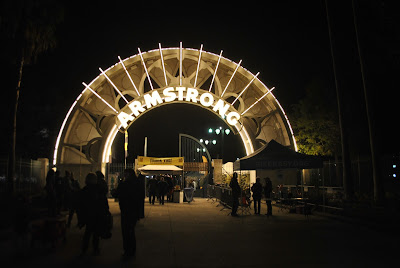
For people unfamiliar with New Orleans history, the French Quarter and its myriad of bars and tourist traps is the focal point for their experiences in the city. But if you know a little history or like me, have roots in the city, you know that the heart of NOLA is in the historic Treme' neighborhood and the iconic Congo Square in Louis Armstrong Park. Treme' is the oldest African American neighborhood in the country, as well as the birthplace of jazz. It's where African American musicians developed the Mardi Gras Indian tradition of drumming, call and response mingled with brass bands. Of course, the essence of all these traditions started in Congo Square, the spot where enslaved Africans gathered on Sundays to drum, dance and celebrate their cultural traditions, which still informs every aspect of New Orleans culture. As soon as we landed, my family and I headed to Congo Square to go to the Treme' Gumbo Fest and hear the legendary Rebirth Brass Band.  Stand...

In Remembrance of Charleston Part Two

Image
In remembrance of the nine people who lost their lives in the Charleston Massacre, this is my second re-blogged post about South Carolina Gullah culture, which holds a strong connection with Mother Emmanuel AME Church. Like the resilient Gullah culture that continues to live on after hundreds of years, the spirit and names of    DePayne Middleton Doctor, Cynthia Hurd, Susie Jackson, Ethel Lance, The Rev. Clementa Pinckney, Tywanza Sanders, The Rev. Dr. Daniel Simmons Sr., Sharonda Coleman-Singleton, and Myra Thompson will also live on. Learning about a destination's culture and history are important aspects of the travel experience for me. I enjoy gathering insight into a place from a cultural perspective. One of the most fascinating culture's I've ever encountered is Gullah culture. This week, I have a feature story about Gullah culture in  Travel Muse . The piece focuses on Gullah history in Hilton Head and St.Helena, South Carolina but the culture extends way ...

Garifuna in Guatemala

Image
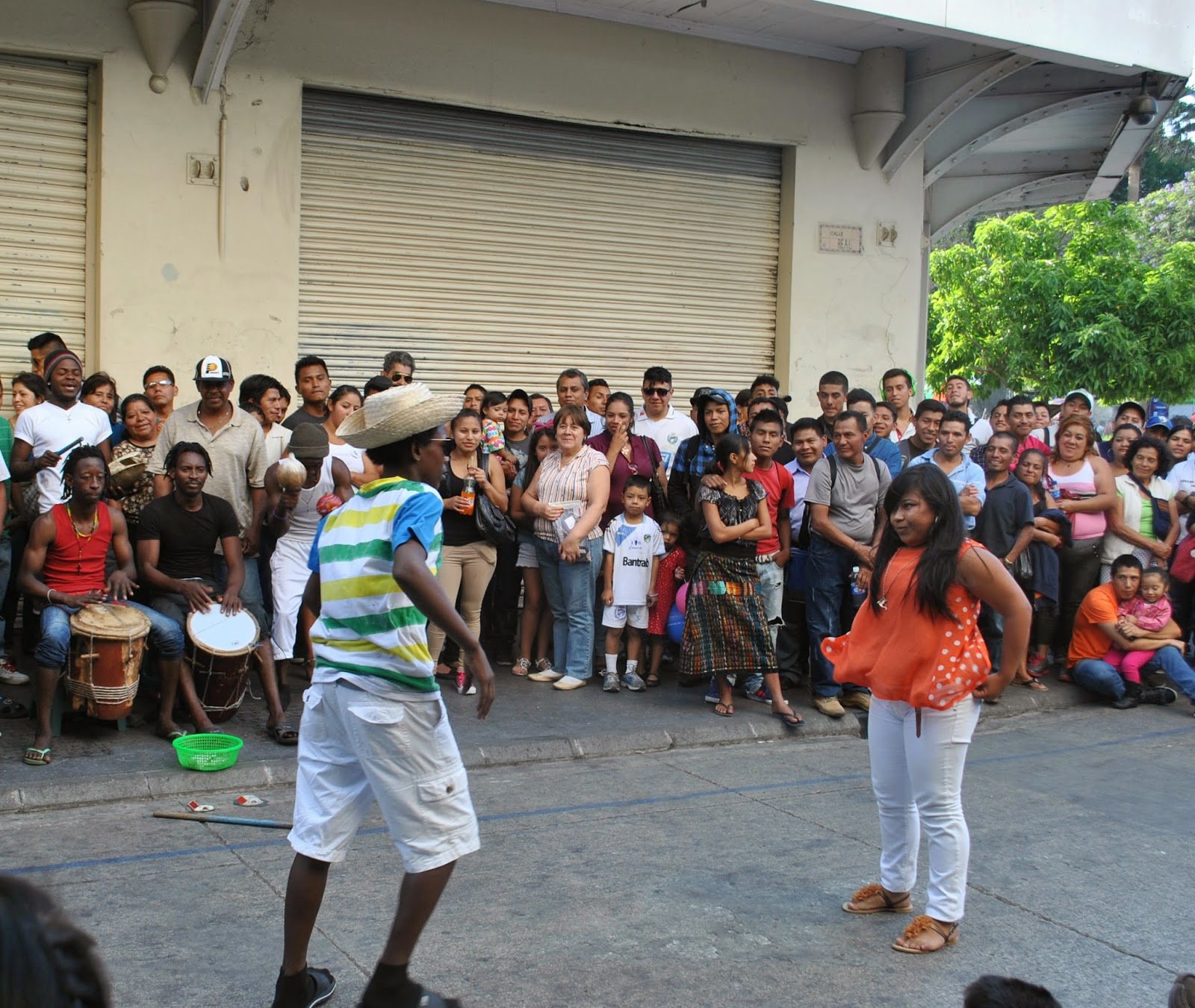
Within hours of arriving in Guatemala City, I was excited to witness a  street performance by Garifuna musicians and dancers. The Garifuna are an African and Indigenous people sometimes called Black Caribs.They are a distinct cultural group that are rarely seen beyond the coastal areas of Guatemala, Honduras, Nicaragua and Belize. So I watched this performance of music and dancing as long as possible, absorbing the rhythms and intricate moves. The Garifuna dancer had pulled the girl into the circle to dance with him and she shyly obliged. The percussion was purely West African and the crowd loved the energy of the performers. Most African decedents tend to be marginalized in Latin America and the Garifuna have battled to maintain their heritage. Historically,the Garifuna are traced to the Caribbean island of St. Vincent where a boat of enslaved Nigerians were shipwrecked in 1675. They formed families and communities with the local Kalinago or Carib population and develope...

Nelson Mandela Has Gone Home

Image
In South African indigenous cultures, death is only reserved for animals. The human spirit lives on so it is said that Nelson Rolihlahla Mandela has passed on, he has gone to join the ancestors, he has gone home. I have spent the last few weeks mourning this  inevitable fact, along with the rest of the world. Madiba (his Xhosa clan name) represents so much more than a political leader to me.  The brutal inhumanity of apartheid that he and his people braved, from being torn from his ancestral land to being imprisoned for 27 years because he had the audacity to protest, is inspiring not because he survived but that he refused to surrender his dignity or humanity during the process. He goes down in history for his formidable feat of forgiveness and reconciliation but he was also a  seasoned fighter who knew when to wage a battle and when to fall back. My own political awareness began with images of the children of Soweto fighting off armed police, posting "Free Mandela" p...

King Sunny Ade and The African Beats (Ibae' Baye' T'Oru'n)

Image
Every spring or summer, I attend a raucous Nigerian party with non-stop music. People come dressed in eye-popping fashions and dance for three-four hours straight.  Every year, I look forward to this party, also called a King Sunny Ade concert.  A typical Sunny Ade concert lasts at least four hours and that’s only if there are parameters like say, the venue has to close. The Minister of Enjoyment, The Chairman, The King of Juju, are titles that Ade has earned for performing blistering sets of the complex, interlocking, guitar and percussion rhythms known as juju. Juju music is rooted in the Yoruba tradition of broad cultural and social commentary. Just one of Ade’s tunes, fortified with a band, The African Beats, of up to 30 members, lasts an average of 40 minutes. It’s the ultimate jam style that has influenced not only countless African musicians but Americans like Phish’s Trey Anastasio as well. A Sunny Ade show pulls out all aspects of Nigerian culture;...

Taste Trippin' Part Six (Francais)

Image
I've complained about Chicago's long, brutal winters but when it really grows unbearable, I just take off to the warmest place I can think of.  That would be Senegal, West Africa, by way of Chicago's only Senegalese restaurant, Yassa. Senegalese food mirrors the culture in general.  It's warm, colorful and very spicy.  Family run and oozing with welcome and graciousness, Yassa offers the perfect tropical escape. With African tapestries and pictures on the wall and two rooms filled with wooden tables and chairs, Yassa feels like your favorite Senegalese aunt's living room, complete with music and tales of village exploits. I go to Yassa as much for the atmosphere as  I do the flavorful food.  Live bands play jazz or R&B and the expansive Gueye family floats about, waiting tables and supplying African anecdotes in free flowing French or Wolof. And then there's the food.  Hearty doesn't even come close to explaining it.  Yassa's menu...

Africa Arrives Once Again With Avatar Movie

Image
You may have heard of this movie, Avatar.  As one of the most expensive movies ever made, this sci -fi epic has captured a global audience, broken box office records and is climbing towards the the title of highest grossing movie of all time. Frankly, I wasn't impressed. In fact, I was insulted by the tired and one-dimensional, "noble savages get saved by white man gone native" storyline.  It's been much noted in many reviews that Avatar is basically "Dances With Wolves" on another planet and I agree. So I won't go into the many racial and cultural issues that the movie has stirred up except to observe that African culture is on major display in Avatar. The Na'vi, 10 feet tall,  blue people of Pandora, exhbit African  traditions and cultural adornments on many levels. Neytiri, the warrior princess played by Zoe Saldana, rocks braids adorned with beads in the same fashion that African women have worn for centuries. Moat, the Na'vi spiri...

Blues From The Blue Men

Image
Last week, half of my CD tower collapsed. It covers an entire wall and holds hundreds of my lovingly collected CDs. The CDs crashed to the floor. Some are cracked, some are scratched. To say that I'm sad about it is an understatement. I haven't been able to deal with it at all. I just look at the piles of music and turn away because I can't bear to go through them and see what I've lost. Today I realized that it was the left side of the case that collapsed. This means that all of my American music genres--blues, jazz, rock, soul and hip hop are in piles on the floor. My global music--Latin, reggae, soca, calypso, African, Celtic and everything in between, rests safely on shelves in the other half of the tower. I haven't figured out what this means but for now it means that I only have access to my global music. The feeling of loss and regret that hovers over me has created a hankering for the blues. I can't reach for B.B. or Buddy or John Lee but I can listen to...

Through African Eyes

Image
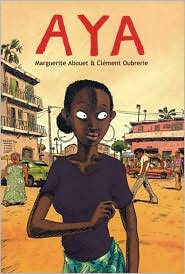
Generally, I'm not a huge fan of graphic novels. As a writer, I develop a very personal relationship with every book I read and graphic novels never seem to exhibit enough depth for me to want to sustain a relationship. Well there's always exceptions to every rule and Aya , written by Marguerite Abouet and illustrated by Clement Oubrerie, is that magical exception. Whimsically drawn with watercolor hues, the book literally called to me in a crowded bookstore. Once I picked it up, it was over. I kick-started a relationship with Aya, a smart, 19-year-old living in the Ivory Coast circa 1978. That was the time of the charismatic president, Houphouet-Boigny's 30-year leadership of a prosperous, forward moving Ivory Coast. Such was the elegance and creativity of the country's capitol, Abidjan, it was dubbed "Paris of West Africa." I have read and heard stories about this glamorous era but it's a vivid reality for me on the pages of Aya . Aya lives in Yopougon, ...

Traveling Through A Liberian Childhood

Image
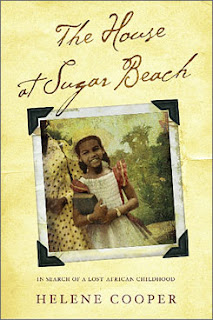
I like to explore the world with books as much as I like to actually travel. A well-written narrative can transport you to places that you'd never experience with just superficial details like photos and descriptions. I've been interviewing writers about the criteria they use to select books for Summer reading and it made me think about my own general reading criteria. As a journalist, I'm really drawn to biographies, autobiographies and memoirs more than fiction. There's something about using the facts to entice readers into your world that gets me. It's no coincidence that some of my favorite writers--Gabriel Garcia Marquez, Zora Neale Hurston, Hemingway, started out as journalists. So when I glimpsed The House at Sugar Beach , at my local bookstore and saw it was a memoir written by a journalist, it was pretty much a done deal that I would buy it. Now it wasn't only that the author Helene Cooper was a journalist, it was that she was a Liberian journalist chro...

Mama Africa

Image
Three weeks ago, I woke up feeling very edgy and unhappy. All morning, a cloud seemed to cling to my spirit and I couldn't shake it. Then I saw the day's headlines. I understood. Miriam was gone. Miriam Zenzi Makeba died of a heart attack on November 10 after a concert performance outside of Naples, Italy. To her fans she was Mama Africa and the Empress of African Song, an icon of African political activism and the high-flying spirit of African music. To me, she was a comforting , lyrical presence throughout my life. Miriam Makeba started performing in the 50s but a lot of younger Americans were first introduced to her in the 80s, when she appeared on an episode of the Cosby Show. I had the good fortune of experiencing a live Miriam concert before the Cosby episode and that performance will stay with me for the rest of my life. Her voice was at once overwhelming with a range that swooped from the sky and back, as well as intimate and soothing, scatting and swirling with a rich ...

Dancing With The Saints

Image
I said I'd explore the complexities of candomble in earlier posts and here it is, finally. I'll admit, I've been avoiding this for as long as possible because there are so many layers and meanings and opinions attached to this religion that I just don't know where to begin. So I'll begin with my personal experience. On a late June night, in the small southern Brazilian town of Vassouras, I was invited to a candomble ceremony for the feast of San Juan. We drove down some roads and up some hills with only the moon lighting the way. Faintly, we heard the echos of drumming. We climbed down some stairs, past blooming bushes and I saw a huge bonfire. Men were holding large drums over them, tuning the instruments with flames. A tiny altar with flowers and a statue of San Juan stood under a small shack. The men sat down, joined by adolescent boys. They began drumming in a swirl of intricate rhythms A groups of women, clad in long white gowns and head wraps, moved in a circl...