Posts

Showing posts with the label Mexico

Lands End in Los Cabos

Image
If you've ever traveled to Cabo San Lucas , Mexico, you have almost certainly visited Lands End, also called El Arco or the Arch. These natural rock formations rising out of the Sea of Cortez are as significant a landmark to Los Cabos as the Eiffel Tower is to Paris. The best way to view the formations is by boat and I almost fell over the edge as I gawked at El Arco. Experts say that these rock formations date back 30 million years and they mark the point where the Gulf of California meets the Pacific Ocean. The Baja California peninsula is the second longest in the world and El Arco is located at the very southern tip, hence the name Lands End. Besides being an essential photo op, El Arco is a sea lion hang out. I spotted several bobbing in the waves as the boat glided by the rocks. Unfortunately, they were too fast for me to snap a pic!

Next Stop: Los Cabos

Image
I try to travel to a different part of Mexico at least once a year so I'm excited to visit San Jose Del Cabo for the first time this week. Located on the Southern tip of the Baja California Peninsula, it's quieter and more relaxed than the party haven of Cabo San Lucas. I'll be hosted by  Paradisus Los Cabos,   a stylish new resort that just opened in December.  Surrounded by mountains and sparkling views of the Sea of Cortez, this expansive property features one of the only swimmable beaches in the area as well as seven restaurants , with the standout being  the Basque-French cuisine of Gastro Bar, helmed by Michelin star rated chef Martin Berasategui. I'll also be checking out the famous Los Cabos coastline and view the majestic El Arco   rock formations, hopefully along with a few whales and sea lions during a cruise on the Sea of Cortez. Please stay tuned for details!

Another Kind of Cenote

Image
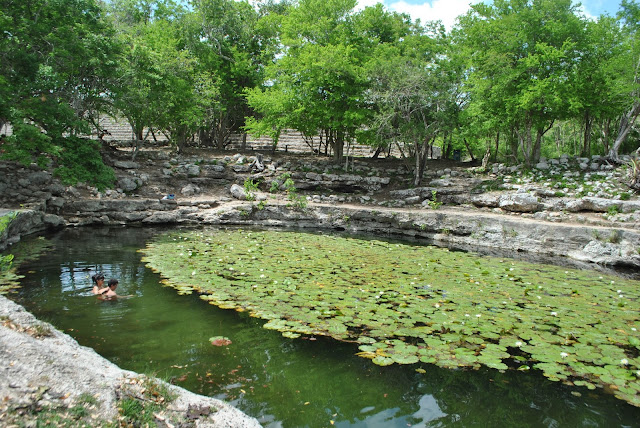
The Yucatan is known for the Mayan ruins that blanket the region but cenotes, or underground freshwater pools,are another hallmark that I particularly love. I remember being dazzled by the sunbeams playing off the water at  X-keken cenote near Chichen Itza so I was excited about exploring another one in Merida. The darkness of  the surrounding caverns and the Mayan belief that cenotes are the entrance to the underworld really make it a special experience.  So you can imagine my surprise when I saw the cenote topped by lily pads, above. Located right next to the stunning Mayan archaeological site of Uxmal, , I thought it was just a local pond. But I learned that there are actually three types of cenotes--open, closed and semi-closed. Each supplies a different kind of experience. I climbed down the rocks into the open pool and realized immediately that it was indeed different than my previous cenote dip. Tiny fish clung to my feet, nibbling at the dry skin! No matter w...

Next Stop: Merida, Yucatan Peninsula

Image
One of my favorite regions of Mexico is the Yucatan Peninsula,which is brimming with vibrant history and a rich culture that's on display on every level, from the food, to the language and traditions. I'm excited to finally be visiting La Ciudad Blanca or the White City, as Merida is called because of the white limestone buildings. I'll be exploring the archeological sites of Dzibilchaltun, called the Temple of The Seven Dolls and one of the oldest Maya sites, dating from 300 BC and Uxmal,  a Mayan town founded in A.D. 700 and declared a World Heritage Site. I'll also be dipping into a cenote or underground pool,which is a hallmark of the region and they always supply a magical experience. Of course, I'll sample the traditional food, music and fashion so look out for some interesting posts in during the next couple of weeks!

Turtles and Tequila

Image
The Pacific coast of Mexico captivates anyone lucky enough to experience it. I traveled the 17 miles of coastline that make up the nine bays of Huatulco and I'm still amazed at the raw beauty. The deep sapphire blue water holds untold treasures, from a coral reef to scores of sea turtles, which I glimpsed up close. I headed to Santa Cruz harbor and hopped aboard a little boat called Tequila. Sailing to the nine bays was an idyllic journey, with salty breezes and freshly picked  avocados for guacamole in St. Agustin. But the waters were choppy on the way back and after four hours of sailing, a big dose of sea sickness smacked me with a vengeance. My crew was unfazed though, and they quickly took over photographic duties for me. Sea turtles bobbed all over those choppy waves and I watched from a slightly steady corner as little faces popped up in the water. We saw whole families swimming by and solo adventurers floating along. Sea turtles nest along the beaches...

Huatulco's San Agustin Bay

Image
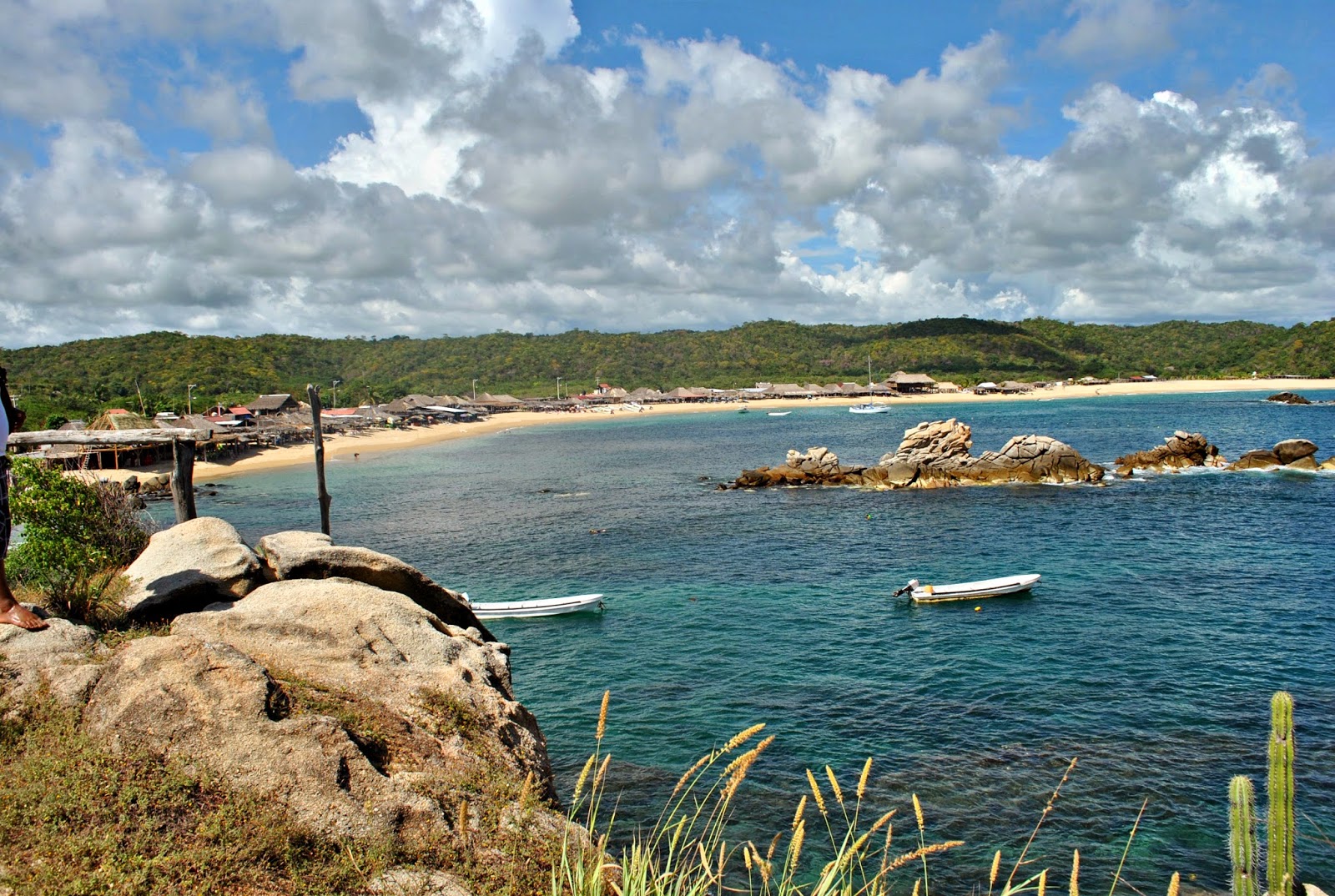
Located along the Pacific coast of the Mexican state of Oaxaca, Huatulco is cradled by the Sierra Madre mountains and the Coyula and Copalita rivers. The region's  pinnacle of natural beauty can be found in its nine bays, or the Bahias de Hualtulco.   I visited all nine bays on a motorboat one afternoon and I was stunned by the surreal vistas at every bay. They unfold along 18 miles of jagged coastline, with different color sands and different shades of water. San Agustin is the furthest out and the most difficult to get to. It is also the most beautiful. The cerulean loveliness of San Agustin's beach grabbed me right away. There were no tourists to be seen, just pristine sand,  a few rustic beach cafe shacks and a smattering of the 100 locals that live in the small village. The landscape is mostly undeveloped with flowers, cacti and animals covering most of the town. The San Agustin church sits on top of the hill overlooking the bay and I was rewarded w...

Huatulco's La India Beach

Image
The beauty of Huatulco, Oaxaca is underscored by the fact that this quiet Mexican town boasts nine bays and 36 beaches. All of the beaches are unspoiled and uncrowded but playa La India, a crescent-shaped beach located in Chachacual Bay , wins the most attention for its serene loveliness and outstanding snorkeling. Accessible only by boat, La India stretches out with pearly sand and lush forest. I walked the beach from one end to the other and even though there were a couple of boats full of visitors, the peace and beauty of the spot was soothing. A coral reef surround La India so the snorkeling is very exciting, you're bound to see lots of jewel-toned fish and other sea creatures. But I preferred to just stroll the beach and listen to the waves. I couldn't leave La India without discovering the inspiration for the beach's name. According to locals, an indigenous couple lived on the beach before it was declared part of the national park system. The govern...

Gulping Down Grasshoppers in Huatulco

Image
I believe in experiencing the culture of every place I visit. That's how you really connect with the essence of a location. So I was a little taken aback to discover that Huatulco's essence is buried in little, wiry, grasshopper legs. Located in Southern Mexico, along the coast of the state of Oaxaca, Huatulco pulses with Southern Mexican traditions. Munching grasshoppers or  chapulines , is one of those traditions. I was hosted by Secrets Huatulco Resort  and when an array of Oaxacan dishes was presented to me on my arrival, chapulines  were the first ones. As you can see from the photo above, they are toasted and seasoned into a mound of spicy critter snacks. Traditionally, chapulines are served with a variety of salsas, guacamole and totopos or tortilla chips or sprinkled on a taco. I was lucky that my first servings were small ones that once covered with guac and salsa, I could forget that I was munching grasshoppers.  I know the closeup above...

Next Stop: Huatulco, Mexico

Image
I'll be escaping Chicago's cold and snow this week with a press trip to Huatulco, in the Southern part of Mexico. Located on the coast of the state of Oaxaca, along the edge of the Sierra Madre mountains, Huatulco is famous for its nine lovely bays; one of them, Santa Cruz, is pictured above. Of course, I'l also be exploring as much Oaxacan history and culture as I can mange. Stay tuned for posts next week!

A Vallarta Vision

Image
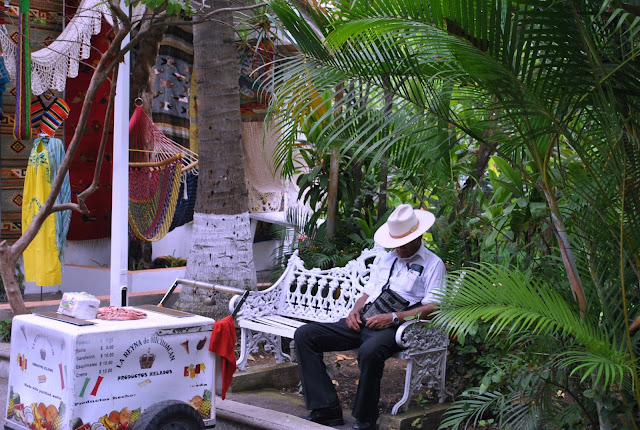
I know this totally looks like an arranged scene but I was lucky to grab this classic shot of a paleta  vendor relaxing in the Puerto Vallarta sun. The vivid colors of the hammock and dress, accented by the perfect, sun-blocking tilt of his hat makes this one of my favorite travel images this year. I think it showcases the appeal of Mexican culture, from the traditional textiles and importance of entrepreneurs, to the natural tropical beauty, all in one snap.

Jalisco's Blue Agave

Image
Mexico may be famous for tequila but it's the striking blue agave plant that really deserves all of the recognition. The state of Jalisco, in Western Mexico, is where tequila was first developed from the blue agave plant and it's the only place in Mexico where tequila can be produced. Traveling through the area, an intense blue cloud covers the places where blue agave plantations blanket the landscape.During pre-colonial times, the Aztecs discovered that the plant harbors honey when lighting struck and burnt the plants. They also discovered a thick,white foam that would eventually be distilled to create tequila. Agave nectar has recently become a popular sweetener but tequila has claimed fans for several centuries. Jalisco produces more than 80% of all blue agave and I loved gazing at the elegant plants although the prickly points helped me realize that they are much better to look at than touch!

Puerto Vallarta's Malecon Magic

Image
Puerto Vallarta is small town with lots of charm and beauty, both natural and manufactured. Besides the Sierra Madre Mountains which surround this former fishing village, my favorite spot was the malecon , or boardwalk. You can see the serene vistas of the Atlantic Ocean and the coral-colored cobblestones above but what about those whimsical sculptures? They may look like characters from a Dr. Seuss book but these metal marvels actually serve a purpose. They're chairs! They sizzled from the sun beating down on them but it was still fun to lounge on these practical art pieces. Puerto Vallarta's malecon  was filled with art so I'll be exploring more of it in coming posts.

Next Stop: Puerto Vallarta

Image
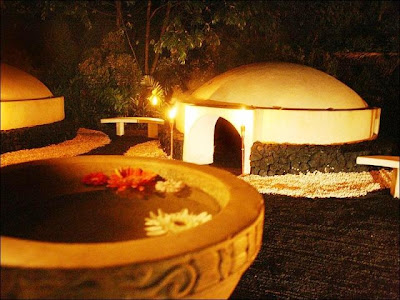
This week, I will be traveling to the Mexican state of Jalisco to explore the traditional culture of Puerto Vallarta. This beautiful coastal city is not only famous for its resorts, but it's also where the mariachi musical tradition started and I'm excited about exploring some of that history. I'm also thrilled about the chance to experience a temazcal ritual. A temazcal, pictured above, is an indigenous steam bath and purification ritual. I'll  be visiting the island of Las Caletas and witnessing a traditional dance and musical performance to top it all off. Stay tuned for posts about my Puerto Vallarta experience as well as a round up of my TBEX highlights!

Chichen Itza and the Serpent Shadow

Image
The energy was electric around the ancient site of Chichen Itza. To mark the sacred ceremony,I was covered in white clothing like many of the almost 30,000 visitors who journeyed to Mexico to witness the first leg of the 2012  Mayan equinox. I had glimpsed photos and seen videos but I still didn't quite know what to expect. Would the Mayan magic shift the ground? Would the sky darken? I intended to find out. Since 2012 marks the beginning of a new cycle in the Mayan calendar, the anticipation at the spring equinox was especially intense. I learned about the complexity of the Mayan calendar system and contrary to pop culture claims, there has never been a prediction forecasting the end of the world in 2012. It's simply the end of the old aggressive, violent cycle and the beginning of a new, gentler one. This cycle is supposed to be filled with feminine energy, I saw priestesses leading chanting rituals at the site. December 21, 2012 is the official transition to ...

Piero, The Pyramid and Mayan Romance

Image
Funny things happen when you travel. Inhibitions loosen, the stars align and stuff unfolds. I've written about the Mayan magic that seemed to float through the air during the spring solstice in Mexico but I didn't even touch on what happened at Chichen Itza. This sacred pyramid is an iconic Mayan landmark, watching the sun's shadow, in the guise of the feathered serpent god Kukulcan, creep down the pyramid's steps was a an otherworldly experience that I'll explore in my next post. For now, I'll discuss the other kind of magic I witnessed. His name is Piero. As crowds gathered to watch the sun descend, a woman shouted, "there's a living god walking!" My group turned to gawk at Piero, pictured above, bronzed skin rippling, wavy hair blowing.  Clearly, he was used to being admired and he seemed to  pointlessly stroll past us several times. But we were there to see the sun's shadow descend over Chichen Itza so we rushed closer to the pyramid. ...

Mayan Massage Experience

Image
I am not a massage person. I get antsy laying still for the process and frankly, strangers touching me is not my favorite thing. But the chance to experience traditional Mayan massage in Mexico changed my mind.  The natural rituals of the Maya are fascinating to me so I jumped at the chance to view this culture from another perspective. The hallmarks of the traditional massage, called Hunab Ku , are the ocarina wind instrument, copal plant leaves, flowers and balche bark, pictured above. Barbara was the lovely masseuse who escorted me through  the ritual. The beginning of the treatment starts with the  Mayan chant, "Tene u susilem/Tene u ya cuma/Tene u dzimodo/Tene u kmac a holalem," which translates to "I am the light/ I am the peace/  I am the love/ I am the harmony."  Mayan massage is noted for its deep tissue technique, especially around the abdominal area. Barbara stretched my arms and massaged my shoulder blades t...

Exploring Mexico's Ek Balam

Image
Although Chichen Itza is one of the Yucatan's most famous ancient sites, Ek Balam, located just 30 minutes away, predates Chichen Itza by 600 years and displays striking structures still being excavated. Ek Balam translates to "Black Jaguar" in Mayan and the imposing size of the buildings demonstrate how significant the city was to the Maya from about 500-900 AD. Despite this, Ek Balam is one of the best kept secrets in the Yucatan Peninsula.  There are very few crowds and I was able to stroll leisurely throughout the site. Restoration has been ongoing at Ek Balam since 1997 and the uncovered buildings include a ball court, a tomb, a palace and a 96- feet-tall Acropolis pyramid. The structures are scattered closely so that you can explore the ruins easily if you like to climb. I recommend sturdy shoes, I saw a lot of lost flip flops on some of the ruins. This is the towering flight of stairs that lead to the top of the Acropolis. The...