Posts

Ti' Punch Tales

Image
I was almost knocked out in Martinique. Not in a brawl but by the heady power of the national drink, ti' punch. A deceptively simple mixture of cane syrup, rhum and lime, ti'punch is not so much a cocktail as a way of life. There was no part of the island, no time of day, where I didn't see the telltale bottle of rhum lined up with syrup, lime and an empty glass. This is a drink so singular that locals prepare their own versions at bars and restaurants. I watched countless mixers until I dared try a version whipped up by Steve, Uncommon Caribbean's rhum connoisseur . The pure strength of the rhum burned my throat and threw me off balance. They don't say,  "chacun pre'pare sa propre mort" or "each prepares their own death" while making ti'punch for nothing. I discovered that the type of rhum used depends on your location on the island, with different areas pledging loyalty to the local distillery. Martinque rhum (that's not a...

Silkworms on the Streets of Granada

Image
I've discovered that when it comes to travel photos and experiences, it's the unexpected that leaves the strongest impressions. Strolling the cobblestone streets of Granada, Spain, I spotted this little boy in his doorway. He's playing with silkworms, an especially symbolic past-time because just steps away from his doorway, the legendary Granada silk bazaar or Alcaiceria unfolded on several streets during the 15th century. From the 15th through the 19th centuries, the Moorish tradition of silk production supplied the Alcaiceria  with fine fabrics that filled hundreds of small shops that dotted the labyrinth of streets and alleyways. The original Alcaiceria  burned down from a fire that raged for eight days in 1843. By that time, silk trading was firmly entrenched in Japan and China and the Spanish silk trade never recovered. But remnants of that history, like these silkworms stored in a shoe box with holes, can be glimpsed if you keep your eyes and mind open.

Browsing Fort-de- France's Covered Market

Image
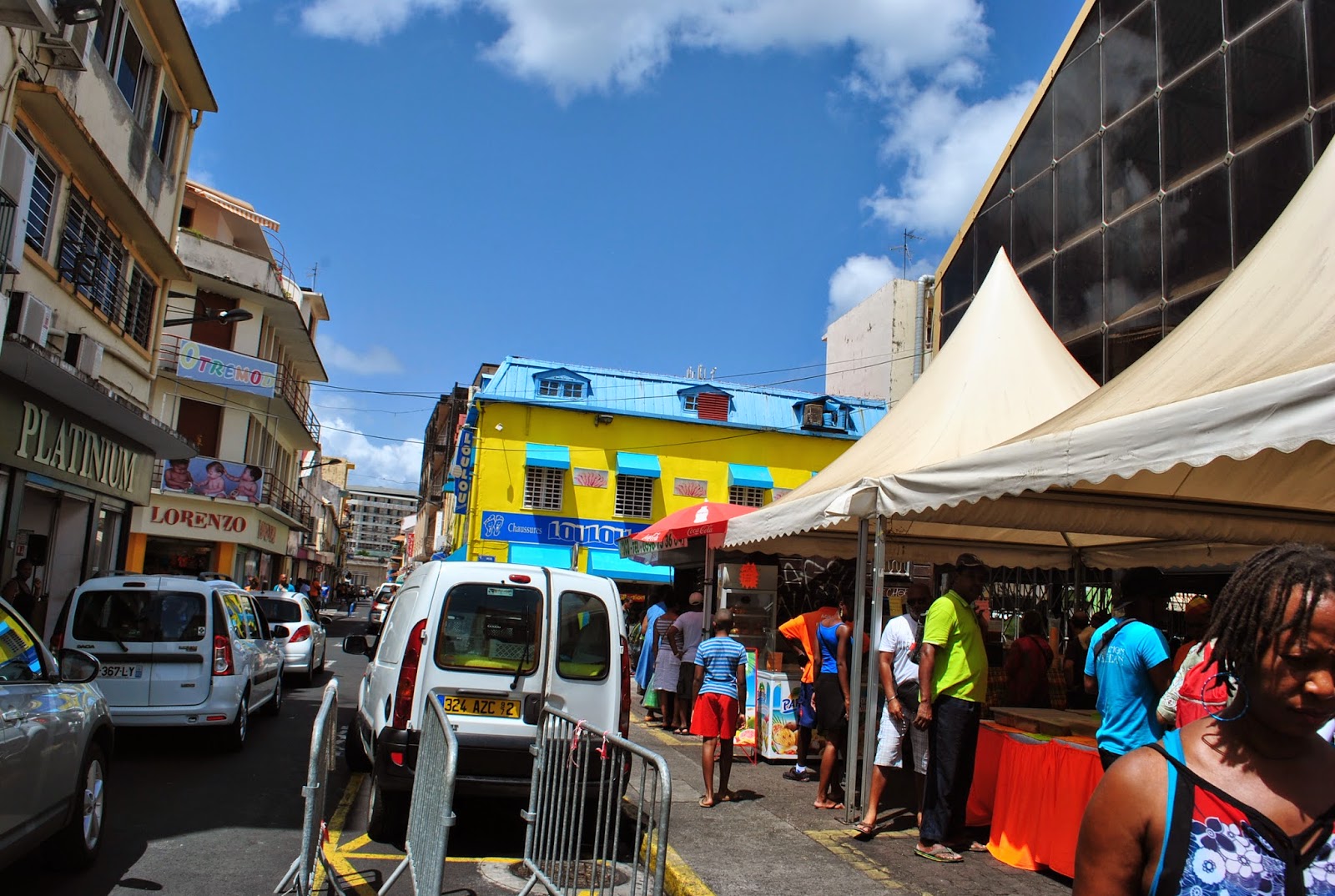
The heart of any Caribbean island is always a bustling, open air market where locals buy fresh produce, crafts, clothes and anything else considered a staple. In Martinique, the cosmopolitan capital of Fort- de- France hosts the island's shopping mecca, Le Grand Marche' Couvert  or covered market. It was designed by a French architect in 1901 and still serves generations of locals. I love shopping in local markets because it's the best way to sample cultural hallmarks. In Martinique, spices are essential. The line-up of spices shown above include a heaping pile of columbo , the curry powder that flavors many Martinican dishes. The madras cloth that represents the island's cultural tradition fills many stalls. The boldly colored cloth appears in basket linings, on dolls, purses and  on an array of clothes. I spent a long time looking through all the dresses and shirts until I found a turquoise madras sundress that I quickly snapped up. Jewelry also play...

Martinique Folk Dancers

Image
Whenever I visit the Caribbean, witnessing local dance and music is always a priority. The essence of the people and culture are reflected in the music and movements so I was thrilled to witness the vibrant dancing of members of Le Grand Ballet De La Martinique. Gracing the lobby of  Hotel La Pagerie  in Trois- Illets, the wave of rhythm, color and spirit took over everyone present. The dancers creole dress uses the bright madras pattern brought from India when indentured servants from India immigrated to the region after the abolition of slavery. The points on the hats represent the wearer's social status, one for free, two for engaged, three for married and four for anything goes! The drummers and musicians are pounding out a traditional  Bele'  rhythm, which traces directly to West Africa. The charm and energy of the twirls and steps can be witnessed all over the island, in Martinican's stylish and fun-loving attitudes.

Martinique's Infamous Headless Empress

Image
She looms in the middle of the tropical splendor of  La Savane Park, in Fort de France, Martinique's bustling capital. Strolling past the palm trees, I spotted the marble statue dedicated to the island's most famous daughter, Josephine Bonaparte. Of course, that wasn't her name when she was born in Trois-Ilets in 1763. She was named Marie Josephe  Rose deTascher de la Pagerie and was called Rose until she met Napoleon after she moved to France and he nick named her Josephine.  It seems that Josephine and the statue that was erected in her honor in 1859, represent the tangled and discordant relationship between France and Martinique. Although Martinique is an overseas department of France , the colonial history and legacy of slavery casts an uneasy shadow over the relationship. In 1991, after remaining in fact for 132 years, Josephine's statue was vandalized. Her head was severed from its base, in much the same way that French aristocrats were guillotined during the...

The Isle of Flowers

Image
It's actually an understatement to describe Martinique as beautiful, it's like calling New York kind of big. This southern Caribbean island stunned me from the first glimpse outside my plane window. The mountains are sweeping, the water a crystalline turquoise and then there are the flowers. The original inhabitants of the region, the Arawak Indians, called the island Madinina, or island of  flowers.  Blooms dot the landscape everywhere and Martinque is especially noted for nearly 100 orchid varieties. Unfortunately, orchid season on the island is March and April but I was treated to a variety of exotic flowers during a visit to Balata Botanical Garden. This flower comes in red and pink and is called Porcelain rose. It's a popular export flower because it lasts for weeks. I thought these long stemmed blossoms looked like flamingos peeking out of the greenery. These striking blooms reminded me of golden dandelions. Of course, they're taller and more eleg...

Next Stop: Martinique Magnifique

Image
It's been a busy summer and a huge highlight is traveling to the French Caribbean island of Martinique. Although the island is noted for lush vegetation and dozens of orchid varieties, I'm excited for the chance to delve into Martinique's multi-faceted culture, courtesy of Martinique Tourism Authority. My introduction to Martinique has been through  the exuberant rhythms of zouk music, the poetry of Aime' Cesaire and through my favorite movie, Sugarcane Alley  so I'm thrilled to experience it firsthand. I'll be visiting the Aime' Cesaire Museum and the vibrant covered market in the capital city of Fort de France as well as Le Petibonum, the restaurant famous for creole dishes, as well as the cook charmingly dubbed chef hot pants. So please stay tuned for some lively Martinique posts! Photo of Martinique's Pitons Du Carbet courtesy of Steve Bennett,of  Uncommon Caribbean