Posts

A View of Macau's Coloane Island

Image
Macao is a peninsula with two islands connected by land fill bridges. Yes, two islands. So you know where this is headed. Taipa is the island north of Macao but Coloane, the southernmost island, really grabbed me. I've never met an island that I didn't love and Coloane is no exception. Check out the green landscape and Maco's highest point, Alto de Coloane.  The island offers a striking contrast to bustling, densely populated and developed Macao. What captured me were the ocean views, quiet beaches and salty air. With tiled paths and Portuguese shops,Coloane really reflects Macao's European influences, even though the Portuguese didn't occupy the island until 1864. Coloane's sea caves and heavily forested hills made it a favorite pirate hangout for most of the 19th century. I don't know about the pirates but I'd gladly hole up in Coloane's hills, as long as I have beach access!

Traditional Chinese Culture in Macau

Image
I'm still absorbing the whirlwind of sights, sounds and tastes that encompass the allure of Macao. It is unlike anyplace that I've experienced before and I think it will take a little time for me to completely translate my perspective. When I think about what stood out, it's definitely the unusual blend of Chinese and Portuguese cultures. I experienced them separately and together in the special Macanese style, beginning with a stunning Chinese cultural dinner at the Sheraton Macao, Cotai Central . It started with the Qin dynasty warrior pictured above. There were two of them, silently guarding the the dining room. And why would a room need guarding you ask? I thought the same thing until I walked into this; a spectacle of sumptuous red fabrics, orchids and fine china, complete with a stage. A six-course feast awaited us, starting with slices of sucking pig, marinated cucumber and wasabi-infused jellyfish, pictured above. The dishes represented traditional Chi...

Next Stop: Macau

Image
I'm not a huge fan of Las Vegas but I'm excited to be traveling to Macao, Asia's answer to Vegas and the world's largest casino mecca. Perched on the Southeastern coast of China, Macao is a peninsula that offers much more than gambling. I'm most interested in  Macao's unusual  blend of Chinese and Portuguese cultures. It was a Portuguese colony until 1999, when it was released back to China and became a Special Administrative Region. The Portuguese legacy is everywhere, from the Unesco World Heritage Cite of the Historic Centre of Macao , including the 16th century St. Paul's or Sao Paulo ruins, pictured above, to the egg tarts and golden codfish drenched in coconut milk and saffron, that typify Macanese cuisine. I'll be exploring Macao's cuisine and history as well as the highlights of Sheraton Macao Hotel, Cotai Central,  the sponsor of my media trip. Please stay tuned for posts and pix!

Ti' Punch Tales

Image
I was almost knocked out in Martinique. Not in a brawl but by the heady power of the national drink, ti' punch. A deceptively simple mixture of cane syrup, rhum and lime, ti'punch is not so much a cocktail as a way of life. There was no part of the island, no time of day, where I didn't see the telltale bottle of rhum lined up with syrup, lime and an empty glass. This is a drink so singular that locals prepare their own versions at bars and restaurants. I watched countless mixers until I dared try a version whipped up by Steve, Uncommon Caribbean's rhum connoisseur . The pure strength of the rhum burned my throat and threw me off balance. They don't say,  "chacun pre'pare sa propre mort" or "each prepares their own death" while making ti'punch for nothing. I discovered that the type of rhum used depends on your location on the island, with different areas pledging loyalty to the local distillery. Martinque rhum (that's not a...

Silkworms on the Streets of Granada

Image
I've discovered that when it comes to travel photos and experiences, it's the unexpected that leaves the strongest impressions. Strolling the cobblestone streets of Granada, Spain, I spotted this little boy in his doorway. He's playing with silkworms, an especially symbolic past-time because just steps away from his doorway, the legendary Granada silk bazaar or Alcaiceria unfolded on several streets during the 15th century. From the 15th through the 19th centuries, the Moorish tradition of silk production supplied the Alcaiceria  with fine fabrics that filled hundreds of small shops that dotted the labyrinth of streets and alleyways. The original Alcaiceria  burned down from a fire that raged for eight days in 1843. By that time, silk trading was firmly entrenched in Japan and China and the Spanish silk trade never recovered. But remnants of that history, like these silkworms stored in a shoe box with holes, can be glimpsed if you keep your eyes and mind open.

Browsing Fort-de- France's Covered Market

Image
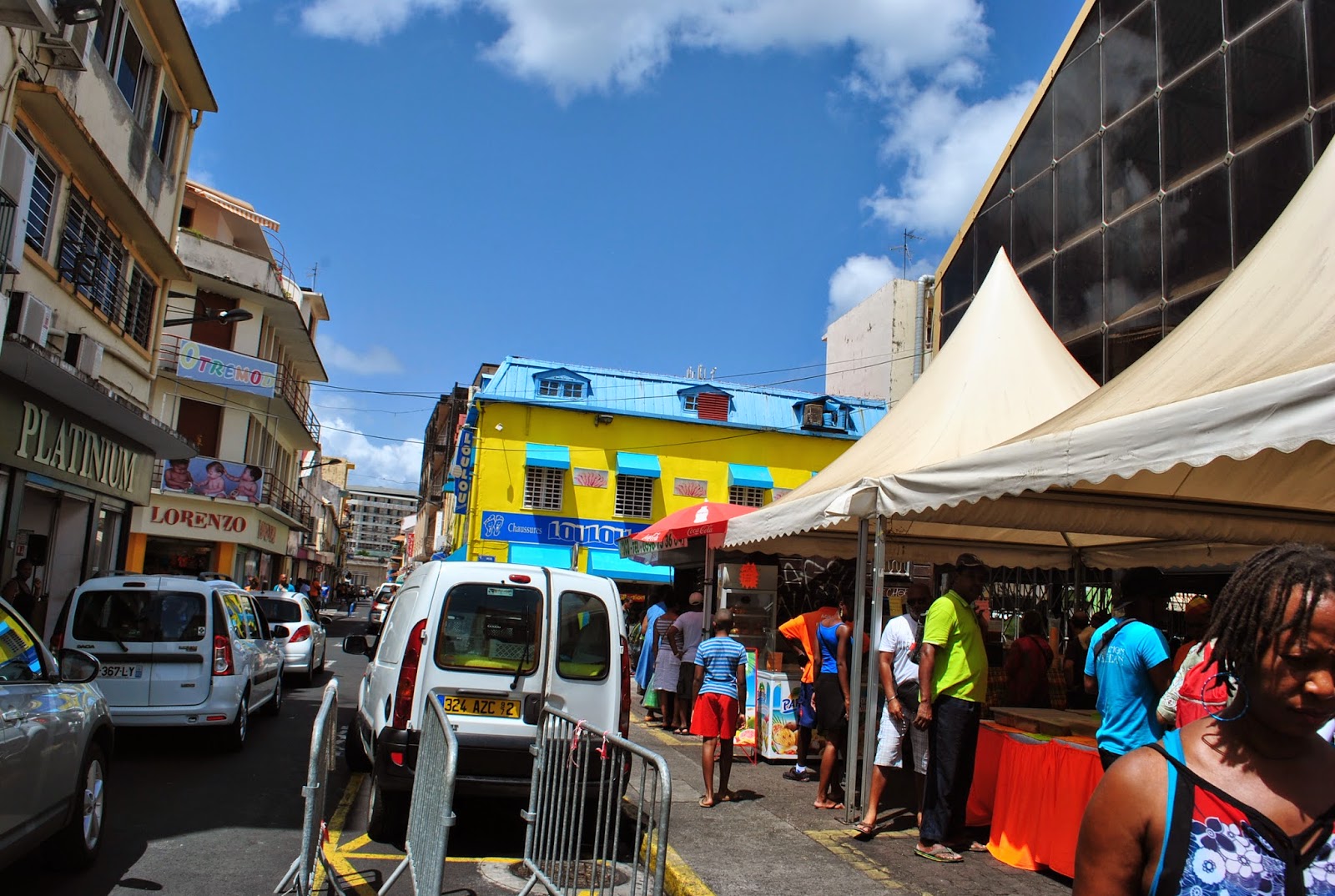
The heart of any Caribbean island is always a bustling, open air market where locals buy fresh produce, crafts, clothes and anything else considered a staple. In Martinique, the cosmopolitan capital of Fort- de- France hosts the island's shopping mecca, Le Grand Marche' Couvert  or covered market. It was designed by a French architect in 1901 and still serves generations of locals. I love shopping in local markets because it's the best way to sample cultural hallmarks. In Martinique, spices are essential. The line-up of spices shown above include a heaping pile of columbo , the curry powder that flavors many Martinican dishes. The madras cloth that represents the island's cultural tradition fills many stalls. The boldly colored cloth appears in basket linings, on dolls, purses and  on an array of clothes. I spent a long time looking through all the dresses and shirts until I found a turquoise madras sundress that I quickly snapped up. Jewelry also play...

Martinique Folk Dancers

Image
Whenever I visit the Caribbean, witnessing local dance and music is always a priority. The essence of the people and culture are reflected in the music and movements so I was thrilled to witness the vibrant dancing of members of Le Grand Ballet De La Martinique. Gracing the lobby of  Hotel La Pagerie  in Trois- Illets, the wave of rhythm, color and spirit took over everyone present. The dancers creole dress uses the bright madras pattern brought from India when indentured servants from India immigrated to the region after the abolition of slavery. The points on the hats represent the wearer's social status, one for free, two for engaged, three for married and four for anything goes! The drummers and musicians are pounding out a traditional  Bele'  rhythm, which traces directly to West Africa. The charm and energy of the twirls and steps can be witnessed all over the island, in Martinican's stylish and fun-loving attitudes.